EMERGING TREND IN DIETETICS PROJECT
Role of Culturally Tailored Nutrition Education on Improving CHF Patient’s Knowledge
and
Preventing Heart Failure Readmissions
Objective:
The Emerging Trends Research Project was designed to provide the intern an opportunity to address a need related to an
emerging trend in either clinical, community, or foodservice management dietetics. The project allowed the intern to utilize the
systems theory and a process approach to identify a research need, develop and implement a research design and method,
analyze results and apply findings in dietetics practice.
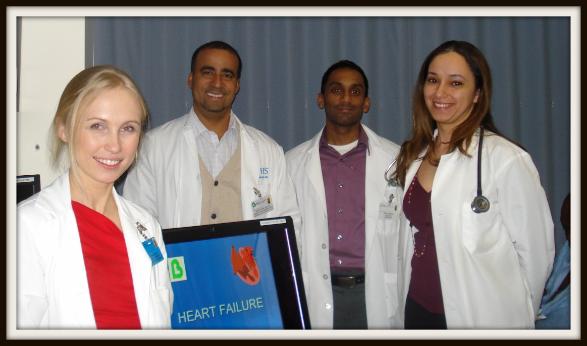
The purpose
To determine if adding nutritional component,
focused on cultural aspect of the therapeutic diet, will improve knowledge,
compliance to the diet and thereby lead to a reduction in readmission rates of
CHF patients to the Bronx Lebanon Hospital Center (BLHC).
Abstract
Congestive Heart Failure is one of the most common causes of hospitalization and hospital readmissions. The rate of 30-day CHF readmissions at Bronx Lebanon Hospital Center (BHLC) is higher than national rates. Therefore, nutritional intervention was developed to improve performance and patient outcomes in cardiovascular services. Due to the large population of African Americans and Hispanics in the Bronx, there was a need to incorporate and emphasize cultural aspects into the intervention. The goal of this study was to determine if readmission rates of patients with CHF drop when culturally sensitive diet education is provided during initial admission
All patients who
were admitted or readmitted to BLHC with the diagnosis of CHF were invited to
attend an educational session about the role of the therapeutic diet in
managing their condition. They were given two PowerPoint presentations. The
first presentation discussed etiology, symptoms, and medications used in the
management of CHF, and the second presentation covered the nutritional needs required
to effectively manage the disease
This single-group
study consisted of pre-educational questionnaires given to 38 participants. Post-educational
questionnaires were then given to 30 patients. Descriptive statistical analysis
revealed a significant improvement of knowledge among the participants of
intervention. Additionally, 30-day readmissions rates dropped by 38%.
In conclusion, the study showed that there is a great need to provide CHF patients with nutritional education in order for them to adapt to their chronic condition and learn how to manage it.
Competences Met:
D 1.4 Evaluate emerging research for application in dietetics practice
D 1.5 Conduct research projects using appropriate research methods, ethical procedures, and statistical analysis
DI 3.2 Develop and demonstrate effective communications skills using oral, print, visual, electronic and mass media methods for maximizing client education, employee training, and marketing
ETD 5.1 Evaluate emerging trends for application in dietetic practiceETD 5.2 Conduct a needs assessment investigating environmental, social, economic, and clinical issues or application in dietetics practice
ETD 5.5 Demonstrate leadership through coordination in the development, marketing, implementation, and evaluation of a health and wellness initiative
Supportive Materials:
- Emerging trend research description
- Power point presentation utilized in CHF patients education
- Pre- and Post- educational questionnaires
- Mini poster

|
Ginevic_PosterPresentation.ppt Size : 1571.5 Kb Type : ppt |
